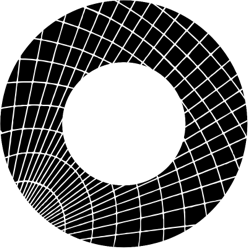
Arena Physica just hit what Pratap Ranade calls the GPT-1 moment for electromagnetism: fully autonomous RF design, producing working structures no human would have drawn.

Maggie 00:18
In this episode of the Mission Matters podcast, we sit down with Pratap Ranade, the CEO of Arena Physica.
Akhil 00:43
Really excited for this conversation. Pratap's building something truly revolutionary. Arena Physica is really focused on the future of what he will describe as electromagnetic super intelligence. What exactly is that? It's developing an AI-native platform for electrical and RF engineering, and it's applicable across domains. It's an agentic platform, Atlas, that pairs non-deterministic AI agents with deterministic hardware, physics, and simulation models to autonomously debug, verify, test, and optimize electrical designs. And as part of Atlas, Arena has also developed the first foundation models for radio frequency, or RF design.
Maggie 01:23
As more and more hardware systems become software-defined, which is a term we've talked about on many past episodes, electromagnetic engineering will be more important than ever. However, the tools available to electrical engineers remain slow and fragmented, largely relying on computational physics simulations that can really take hours to run. Many of these tools really don't talk to each other. The data remains siloed and fragmented in all kinds of different tools, really slowing down some of the most crucial engineering that we're doing today.
Akhil 01:54
And what's really exciting as Maggie and I and the Shield Capital team look at technologies that truly do serve the national security market as well as a host of others throughout commerce and industry writ large. That's customers like Amkor, semiconductor customers like AMD, healthcare customers like Bausch + Lomb across the gamut. And, last time I think, Pratap, when I came to the office, I mean, you've been at this since 2019, raised more than 60 million, but most importantly have an incredible 80-person team all in-person in Manhattan working collectively on both the future of hardware and how it integrates with AI agents, and evolving and developing faster. So excited for this discussion.
Pratap 02:35
Great. Guys, it's great to be here. Thank you for having me.
Maggie 02:38
So, Pratap, I wanna start with just a basic question. What exactly does it mean to you to be building the future of electromagnetic super intelligence? And maybe part of that, can you tell us a little bit about what Arena is building today?
Pratap 02:51
Yeah, for sure. Like, let me answer your first question, electromagnetic super intelligence first. So the thesis very simply is, you know, there is, I would say, consensus view that language models equal intelligence. So ultimately make a language model very big, and it will kind of reason about everything. We actually think language is not the only primitive of intelligence, and we're seeing, you know, this fringe belief getting a little bit more popularity under the moniker of world models, right? So an animal doesn't learn to move by reading books about it, right? Like movement is probably another primitive in and of itself. You know, protein structure may actually also be one, and we're seeing some really great work out of DeepMind on this. Our belief is, for physics, the fundamental primitive is fields. And, you know, Isaac Newton did not come up with calculus, because it was fun. He came up with it because language was a very poor description of what's happening with physics. And so if you think about electromagnetism, of the four fundamental forces of physics, which is the strong force and the weak force, which are nuclear forces, gravity and electromagnetism — electromagnetism is the one that humans have industrialized the most. We use it to make, you know, our entire semiconductor revolution. Think about radars, photonics, it's all powered by that. One of the core beliefs we have is if you were to build a very large model trained on electromagnetic fields. So imagine your training tokens aren't words, but they're EM fields. You would be able to understand how particular materials and geometries, create certain electromagnetic behavior. And this is basically what's used when people are designing, phased array systems for satellite communication, for radar, for high-speed chip-to-chip communication, and interconnects. And even as you move into light and photonics. You asked about software-defined hardware. We'll talk more about that, I'm sure. But you think about a lot of these companies, like our customer set, including companies like Anduril and AMD, Akhil, like you mentioned, they're fusing the benefits of advanced electrical design, mechanical, and software all together under one h- one roof to create remarkable new machines, right? And so here you have problems that part of them can be solved with LLM-based agents, part of them require physics models. And so our Atlas product is an agentic product allowing advanced hardware engineering across those three disciplines when they're enmeshed together. And actually Heaviside, our EM foundation model, becomes available through Atlas.
Maggie 05:21
So maybe just to level set for people who aren't as familiar with the world of electrical and RF engineering, you know, what is the current state of design tools for these kinds of engineers? And then maybe just contrast that with your Atlas platform.
Pratap 05:34
Yeah, for sure. So the current state of design tools is highly fragmented and old, right? So if we look at it, you have... Let's say you're building a new, autonomous aircraft, right? You are designing electrical circuit, you're designing the logic of it, then the physical layout. You're putting that in time, in a housing, like probably a metal box of some sort that has to go through, withstand G-forces, go through various, you know, temperature regimes, probably like do some degree of insulation to sort of EW. And then you're running specific software on it, probably low-level software, on the flight computer. You're not writing, you know, you're not writing like a Python app, right? And so all those three interact. If I change how the software behaves, I might heat up my, you know, I'm gonna generate more heat, right? I'm gonna generate different behavior. I'm gonna change how much current is even going into a servo. So these three disciplines, interact very deeply, right? And you can imagine, you know, someone once mentioned to me, the problems always emerge at the seams between teams. And so the problem here is you have a mechanical, engineering group, an EE group, and a software group. Now, software, they're running on GitHub, which is owned by Microsoft. Mechanical might be running on NX by Siemens, or SolidWorks by Dassault, and then electrical might be running on Altium, which is owned by Renesas or, a Cadence or Synopsys product. So you have three different, very large incumbent tool chains that you can imagine aren't the most sophisticated and don't play nice with each other. And then oftentimes, you actually have siloed organizations as a consequence. These guys, you know, they're not having lunch together, even if they're in the same office, right? And so, but yet we need all these three disciplines to come together for, like, that first autonomous flight to go successfully. And so structurally, we think there's actually a problem with the fragmentation and the age of those tool chains. Plus, you know, the organizational mirroring of that, which is three siloed orgs. If the future is more companies doing software-defined hardware, more and more vertical integration, moving really fast, we need a way for this to look much more integrated, much more seamless, sort of like the way software engineering is done.
Akhil 07:48
Pratap, I love the seams between teams connotation. It brings up so many things, and I think maybe highlights we've been hearing a lot about this, you know, software-defined hardware, or in the national security domain, right, the software-defined warfare. But that inherently involves both technically and operationally combining those two seams together. What does software-defined actually mean to you? We've had this conversation on a couple podcasts, and I think it's an amorphous term, right? There's a technical aspect to it. There's clearly, you know, a cultural, a team aspect to it as well. But how do you see the software-defined future and really the role of electronics in the work that you're doing evolving? And where do you want it to be? If you can paint a vision or day in the life of someone working at that seam, what does it look like right now, and what should it look like?
Pratap 08:37
Yeah. It's a great question. So I think software-defined is this broad term that has come to mean in many things, but it's definitely like it's a powerful trend. A simple example is a Tesla with an over-the-air software update. You've got the same hardware, new software update lands, it's suddenly capable of more. And I think this is a beautiful idea because you can take advantage of the sort of, you know, rapid ways in which we can evolve and adapt software to give your hardware new capabilities. And so this theme, I think we started to see with software-defined radios, but just continues to be sort of the dominant theme. I think one thing that's not talked about often is, you know, we can draw up this image in our heads of, great, I've got hardware, now I'm just gonna put some software on top and software eats the world. I think the reality is it's like you've got your brain, you've got your body. There's actually a very complicated nervous system and spinal cord and a bunch of stuff that is really important to get these things to work together really well. And I think this is where we're seeing a lot of the fracturing, both on the tool chain side and the sort of, you know, employee side. Now let's say in a simple example, I'm an individual engineer with all of these skills and I'm working on my own project. I'm taking files out of one system, I'm putting them in another system. You know, my code, and even if I'm using my coding agent, is unaware of the hardware environment it's going into. My electrical software is unaware of the mechanical. We've literally seen cases where you've made a board, an electrical flight computer board. It's great. It's designed to spec perfect, turns out beautifully. You've-- your mechanical guys have done your mechanical housing, also designed to spec really great. You literally have a case where then the copper on the board touches the metal from the mechanical, they're both in tolerance, and you short the board. And this is not a-- this is not rocket science. This is very knowable, but again, it's a function of those sort of, separation of teams and separation of tool chains. You know, in software, we have, this idea of like, you know, continuous integration, you know, like CI/CD. You're shipping your code, tests are autonomously running, it's getting merged in, and of course, this is taken to the next level with agents. Why can't you have something like that on the hardware side, right? Why can't you have sort of like, "Hey, I've updated my firmware," automatic compatibility checking with everything else? "Oh, I've updated my board design," why can't it check for coherence across the mechanical things? I think these are things that hold our engineers back, and I think what's super exciting to be doing this at this moment in time is, you know, for the first time, it feels like you have-- these companies have an imperative to move fast and ship new hardware. This hasn't always been the case in the last several decades in hardware. But with companies like Anduril, leading the charge on the aerospace and defense side. Also, companies like AMD, putting the most advanced AI inference chips in the world now out there and building data centers, at like breakneck speed. There's this massive race which is creating extraordinary demands on engineering teams that are already pushing the limits of collaboration, but now they're going an order of magnitude faster. They're already building frontier hardware. You know, the only solution here is AI and automation. This is not one of those things where we're coming in to take a job. This is one of those things where literally our customers are like, "There is no way this roadmap gets done without AI as part of it." And I think that's what's-- it's creating a very natural place to plug in. And personally, as a big science fiction fan, you know, we want a future with like sentient factories, growing machines and stuff. How are we gonna get to that world? We want space elevators. I think this is one of those key unlocks. I think if we're successful, we get to see that science fiction future come centuries sooner.
Akhil 12:11
Yeah, absolutely, Pratap. In the last 10, 15 years, most people didn't go become double Es. They became CS majors. And so you're not taking jobs because actually we just don't have enough of folks at that layer to go support that.
Pratap 12:24
No, exactly. Everyone went into software engineering. We lost a lot of hardware talent.
Maggie 12:29
Yeah, so Pratap, I wanted to, you know, switch gears a little bit here and dig into a couple of just technical questions on how exactly you're able to make a system that's capable of doing some of the work of electrical engineers. And one of the things I find really interesting about your platform is that it's not like today you just have AI models that are magically able to do everything. You know, if you actually look back at the history of a lot of these electrical engineering tools, you know, there's some very sophisticated tools that have had decades and decades and decades of engineering put into them to make these simulations work really well, you know, whether that's Ansys, Altium, Cadence, Keysight, et cetera. So I'm curious to hear, could you talk a little bit about how you combine these non-deterministic foundation models alongside these deterministic simulation and solver tools in order to 10X the performance of both of them?
Pratap 13:26
The way we think about it is, so if you think about the sort of life cycle of engineering, right? You have-- You could think about it as kind of a grid, right? Where the rows are, you've got electrical, you've got mechanical, and you've got software, and they're all interacting as you sort of co-evolve through this sort of evolution of developing a new software-defined hardware product. So you'd start with design, right? And then you would do some degree potentially of simulation. Oftentimes it's quick calculation, not quite simulation in the design verification, because obviously it's fastest to iterate on the design. The minute you start making it, you start incurring this longer cycle time 'cause you have to make the first version physically. So you get that back and you enter like what people would call engineering validation testing or design validation testing. You have the first prototypes. You know something's wrong, you wanna iterate it and tune it. Then you get to, okay, I've got like a production instance, my testing is good, and then you move into kind of mass production and operations. So if we think about this as our life cycle, what we believe is the current system of tooling, right, EDA tools, simulation tools, you mentioned Keysight and test equipment. These are amazing companies that have built very deep, sophisticated solutions that are trusted by pretty demanding engineers for a reason, right? Our view is not that we're gonna roll in and, like, do an agentic EDA platform. I think that's a... You know, maybe one day one will kind of exist and replace it. But I think the idea is you as an engineer are often, like, flipping. You're moving across those stages, and as you move across stages, if you're a small company, you may be doing all of it. If you're a larger company, that's usually a different team. And again, in our grid, you're either going up and down, like talking to mechanical, talking to software, or you're moving left to right as you go from design to validation to test, you know, into production. And here, like the simple case is you're alt tabbing, switching between tools, trying to give them context, right? And so how can we take the power of all these tools? You know, there was a statistic I read, I think recently, I think it was a couple weeks ago now, agentic traffic on the internet has now surpassed human traffic, right? So we're seeing like the advent of agents. So now if I'm an engineer and I'm going to invoke my agents, how do I get an agent to effectively help me across this thing? The idea is not like I don't need to replace my EDA software, but I want my agent to be able to do work in my EDA software. I want that agent to be aware of what the mechanical implications are. And I think here is where your question is very, like, particularly becomes like very pointed, because you do want this flexible reasoning capability of an agent. You do wanna be able to ask it a question. You don't wanna have to spell everything out. You wanna be like, "Hey, can you check if this is gonna work well under the conditions that you know I'm going to operate in?" It can inherit like, you know, the ConOp and requirements and specs. So it's like, oh, I know you're operating under these G-forces, these temperature gradients, this sort of electromagnetic environment. So, you know, it can fill in the blanks, and this is where you need to be very precise. And so the first piece Atlas has is a meta graph which spans those three layers and is deterministic in nature. So it enables graph traversal, hierarchical graph traversal, so you know what nodes this is connected to. Like I mentioned the automotive example, it's literally tracing the wire paths and saying, "This is the most likely place where you're probably seeing a short." So you really want that to be just, you know, a deterministic picture of the world, right? The second place is then sometimes you need to say, "Okay, what is-- what am I seeing and how does it match with expectation?" And those expectations are still determined by physics, right? And so this is where, you know, in the current case, you would agentically invoke a physics simulation. And now I think anyone who's used physics simulators, unlike Apple products that are really built to make it easy for use, because you have a very sophisticated user group, these products are terrible to use. They're slow, they're ugly, they're... I mean, it's not a fun experience, right? And so how do you actually execute that simulation workload or that physics workload correctly? So these are the two places where if we get this right, you can pair the flexibility of the language model with deterministic lookups on the graph, and then deterministic invocation of the physics simulator. And then if we play this movie forward and we say, okay, agents are gonna continue to get better and this is gonna get easier. You solve the efficiency problems. This is when we start hitting the hard physics wall, and then the next inevitable solution has to be a change in how we do physics simulation or train AI models for physics. And this is where we strongly believe LLMs are not the answer here.
Maggie 18:02
Yeah. So can you talk a little bit more about what it means to build a foundation model for RF? I think most people when they hear foundation model, they think of a language model, you know, maybe a coding model, maybe they can understand like an image generation model. You know, we've all played around with ChatGPT and Gemini and others to generate images. But what does that mean to build this for RF or electrical engineering? Like, what is the data that you're training this on? Are you starting from scratch? Are you building on a base model?
Pratap 18:30
Yeah. So in order to answer your question well, I might take a one-minute detour and talk about language models, right? So before language models, we had a whole field of natural language processing and where we're really solving these sort of use case-specific problems. We were using different types of models to group words together and, you know, kind of like dismantle sentence structures and create n-grams and really like think about that kind of problem set. What we found with language models was an architecture with the transformer that let us scale it up very easily and, an attention mechanism that let us fetch all of the right context around a particular word to understand what it means. And I think as someone said, like, the meaning of a word is entirely determined by the words around it, right? And so effectively, your cross-attention mechanism is scanning every other word, associating that and saying, "Okay, great. If I can understand the full context around this word, I can predict the next word." So what's interesting is that that problem setup is very general, right? That would apply to any word, any language, like, and as we've seen even in things that we don't traditionally think of as languages, but are languages like coding. And so as you scaled it up, you know, OpenAI in January 2020 published this seminal paper on scaling laws, also followed by a DeepMind paper on the Chinchilla scaling laws, and that was a profound moment, right? It was the first time in machine learning history where a model got better, as the model got bigger, not just as a function of data. So, as you scale compute, model size, and data size, you're getting more capability. As we pushed those parameters to very large values, we saw this emergent behavior where you could do more general learning, generalize across languages, generalize across tasks, right? So that's the current state. Now, if we think about electromagnetism, and you mentioned RF, is like actually determined by how Maxwell's equations kind of determine how like, you know, any current that basically creates an electric field — electric field creates current creates electric field. But you have an electric field that's changing, that induces a magnetic field. And, you know, electric, changing electric and magnetic fields are also like literally fully describe light, which is a photon. If you actually have a model that's going to learn and generalize, it will learn the behavior of electromagnetic fields as a function of the geometry and the material that's an input. So the premise is if we can build a large model trained on EM fields, you learn that relationship. So just like you've seen with language models, you'd be able to basically just say, "Hey, give me a seven gigahertz band pass filter," and it gives you back. And so what we achieved in March, end of March this year, was what we consider the GPT-1 milestone for electromagnetism. Fully autonomous design for 2.5D RF structures. So an RF structure being like some combination of a metal wire and an insulator, a few layers of it, and then they're connected together with these little vias that connect the different layers, and the structure should, you know, behave in a certain way. And I think what was super interesting is, one is it was done autonomously. You-- There's actually a public preview. You could play with it online. You could type it in, and it will generate you a design. But two is we saw some very strange designs coming out of this, and there was a few that looked more like QR codes than something a human would draw. Now, these are not superhuman designs. Those designs did not have a capability that human designs couldn't do, but it's super interesting. At this current scale, GPT-1 scale of the model, you're seeing weird designs that we wouldn't have come up with that work automatically. If we scale this up, our bet is the best answers live in those weird designs that we couldn't even think of. And, you know, GPT-3 version of an EM foundation model is probably a breakthrough EM capability that, like, just hasn't been done by people today. And like, you know, We got a copy of the book about Lockheed Martin Skunk Works, for everyone on the team because I think that's probably the first example of people wielding EM in an original way and actually creating stealth as a national security advantage. So, you know, you think about where that goes, I think there's a lot of, like, technology that we could build that we can't really do today that this would basically unlock.
Maggie 22:44
So I guess one question that always comes to mind for me when I hear about these sorts of specialized foundation models is just where do you even get the training data to build something like this? Like, where do you get the EM fields that allow you to build these kinds of models at scale?
Pratap 23:02
There is no EM training data publicly available. We looked really hard. On the one hand, that makes it difficult for us, but on the other hand, that's why, one of the reasons why it's very valuable. Anyone who would need to do this would have to create their own data. And so there's a few ways in which we build this. We think about it as a layer cake. So the first layer is you create a lot of expert-guided templates. And so the reason here is there's 10 to the several hundreds in the power of possible EM designs. So if you just go and explore the space and simulate it, most of the space is garbage and not interesting, so let's not waste our time. How do we get the interesting parts of the space? You know, in human language, we were training off of something someone wrote on Reddit or something someone wrote on GitHub, so it was automatically meaningful. We were training on the meaningful set. So here we've hired a few of the world's leading RF experts, and they're actually creating seed designs. These seed designs then we scale up parametrically, similarly to how video games procedurally generate forests and trees with varieties based on like one initial template. So that creates like a big part of the initial layer of the cake. Then around that, we insert random deviation and noise because we wanna get some of the interesting stuff. So you start exploring the entire wider universe, rate limited by spend and compute, but like starting with the interesting regions and distorting from there. So that's all part of the simulation stack. We use a mix of different open simulators to do this. I think one of the great insights from the language models is all of your data doesn't need to be great data. Like a lot of bad data is still useful to learn language. So then we take the very top candidate designs, we fabricate them, and then we measure them in our lab. And so that's the smallest amount of data, but that is the highest quality data. And again, if we look back to language models as an analogy, you know, that last layer for alignment for the ChatGPT model was, I believe it was only a few hundred thousand data points, but it was very high quality data points. So the view is that's sort of the layer cake, that we're building for training the model.
Akhil 25:06
Thanks, Pratap. Maybe switching gears again, you've got a range of folks that are using and pretty rapidly, right? You've got a lot of inbounds that have just come in being like, "Oh, this is a huge bottleneck. Let me go try and run with it," and then seeing some amazing expansion based upon some initial pilots. Any immediate lessons on, you know, one of the first pilot that comes to mind and just how quickly it scaled? What's kind of interesting about the initial use case that came about? And then, is that generalizable across some of these which seem kind of niche, right? Like going from Anduril to Bausch and Lomb on initial surface don't seem that near to each other, but at the end of the day, we're making an embedded system and a set of systems and devices to go do a variety of things.
Pratap 25:53
Yeah. So even though the industries are different, you know, those are a few of the public customers we could talk about this more in each of these industries. But even though the industries are different, it-- they're-- what they share in common is they're all building software-defined hardware at the frontier of their field in a hurry, right? And so this is kind of, you know, you have, all of them have this property of a mechanical, a software, and electrical team coming together to create something brand new. And I think where we're focused today is really people on that frontier because they're the ones who are really pushing the limits. So, you know, AMD with their next generation chips, Anduril obviously with next generation hardware, you know, BNL actually innovating a lot of like, surgical hardware as well, like actually on the med device side. So you look at the-- those-- the functionally, the problems actually look very similar, and the teams actually are structured in similar ways with similar tool chains. Obviously some of the details are different. The degree of electromagnetics in each one is different, but you actually have this sort of like common set. I think the pattern that we've seen from pilot to rollout, that's very exciting to me, is- We're either getting pulled in where there's, of course, a pilot would usually begin where there's the most acute pain. So either you have acute pain, which is you're trying to get a brand new product out the door, you're having challenges in design validation or in testing, or you have like, let's say, a production product and you have like a troubleshooting or operational like repair problem. These are often two acute places where we will get drawn in. What I'm super proud of is every time, once we're through the pilot and it's deployed and people understand and see what Atlas can do, it gets pulled upstream. So if we started on the right side, which is like test and production, it's continuously getting pulled into R&D, which is the next question is, "Oh, wow, it helped me..." Like, we have had multiple cases where the time to root cause a failure has dropped from six hours to about 20 minutes. And that's pretty profound change, but it's able to pinpoint the problem, and not just that, but because of the meta graph, link it back to the specific design area of interest. And so what we've seen now is those companies now injecting Atlas into the design review process so that you basically have, oh, great, I want to connect those two. So not just gonna help the technician in the field root cause, it can actually help my next version of the product get better. And so we've seen this in automotive, we've seen this in aerospace and defense, we've seen this in semiconductors, and we, you know, we've also seen the other version of it, like expanding right, which is starting in test and design and saying, "Oh, wow, can I now give this expert capability to a field technician?" And that will often, from the design team is like, context switching is expensive. I don't wanna take a designer off of their next project to go field an L1 or an L2 support request, but could I give kind of Geek Squad in a box to an operator in the field, right? And so you're seeing this sort of intelligence getting initially deployed in one place, and then sort of radiating out. And I think this is actually one of the organizational benefits is you have, you know, there has been this quest for shared learning and all of the data going into one place, for a long time, right? Ever since like the big data days, and obviously, you know, given, my experience at Palantir, you know, that's a core kind of, value prop of Palantir, for example. But I think what you see very often is people are busy. You can interpret that as people are lazy, but they're busy. I may have all the data there. Am I really going to go and spend my evening now going and like searching through it to see if there's a way I can make my design better? Probably not. I probably have better things to do. And so what's different now is we've changed what used to be like a pull into a push. The AI is doing that for you, and it's injecting in your natural course of work, "Hey, Akhil, this next design, by the way, this part of the battery management system has had challenges in the past. You might wanna consider this additional piece of pre-charge circuitry." Right? And that's just being pushed to you in your natural flow before you were gonna go to design review. That's where you want it, right? And so that's actually what we're seeing is like this, the organization now as an organism starts to learn and have memory in this way that's totally new.
Akhil 30:05
Makes sense. And, Meg and I can definitely share some stories on battery management. Definitely a hot topic these days. Can you, Pratap, share an example? You know, have us come into a sales pitch or customer call or an on-site visit where you had just that one person in the room that was totally not with the program, that was just like, "This will never work. I can't trust this." What was that conversation like? How did you build trust with someone like that?
Pratap 30:35
Yeah, happens all the time. And I think especially with our target set, you can imagine these engineers are remarkably good at their job, and they got there by being right, right? These-- They're not software engineers. Software engineers, we're wrong all the time. Oh, ship something, it breaks. Move fast, it breaks. You can't move fast and break stuff if you're building a plane, right? Like, you don't do that. It is a very, very different culture, very different mindset with a very good reason. And especially like we mentioned the customer, we're lucky enough that, and, you know, by good fortune and also by deliberate choice, we're working with customers that are at the cutting edge. These are very, very good engineers. So skepticism is high. Barrier of entry is very high, right? And so what we found — I'll give you one example — is we came in with a very hard problem around, like, a new type of chip. And, you know, we'd scoped it down to, "Let's help you test this chip faster. Let's help you, like, do the testing faster." And, you know, we had, like, a larger set of things we wanted to do, and we narrowed it down to one where there was one engineer who was, let's say, slightly more open-minded than the rest to, like, give something a shot. And the skepticism was very deep, and it was very grounded in the principle that I'm an engineer, this is how I think, this is how I reason. This is not a probabilistic game. There's no way some AI model is gonna come in and do that. Like, it was like... And in fact, they've all then used ChatGPT and Claude at this point and been like, "I can't trust it," right? So you have this immediate out-of-the-gate trust problem. And in this environment, it started with basically just creating usefulness, just creating utility, which is saving a ton of time around their core problem. So not yet touching the core that we wanted to go after of that intelligence, but all the little stuff around it, making it easier, like, oh, kick off your testing job, execute your testing job, parse your data. Like, make it all really easy to use. And one of the principles has been show me your work. So Atlas evidences everything it's doing. It annotates exactly the calculation it used, where it got the value from, so it's auditable. So Atlas is like, it's like a good student showing you its work. It's one of the features that our engineer users love. They literally call it show me your work, and so that's been powerful. And then it's just been a lot of, like, good old startup, like, grit and grind and being in it with our customers, which is something we learned from Palantir, which is, you know, you're not going to be trusted with the customer's biggest problem overnight. No matter how great your innovation is, they're not gonna give access right away. Like, we've been working with these customers now for several years in many cases. And over time, you know, we've been with them sort of through thick and thin, and we find that's earning access to the problem. And for us, that's earning more degrees of freedom for the agent. So in the semiconductor example of it was probably maybe, like, nine months in, 10 months in, they give us a call. They said, "Hey, can you help us boost performance of the chip?" But like it's basically a natural consequence once you're done with testing and you're getting the results and it's working, how do you get it to sort of hill climb in performance? And they're like, "We know you didn't exactly build it for that, but could we, like, could we do it?" And we said, "Look, we didn't build it for that, but do you have some sort of verification environment the agent can access?" And they actually had a device farm of chips, new ones that had come back that were set up on boards, and, it was a performance optimization game, performance per watt being a big unit. And we said, "Look, give us the weekend. Give us access. Let Atlas run." It took about a year of trust-building to even be in the place where they would ask us, and they would give Atlas that secure access. And then Atlas just went to town. And that's when seeing is believing, and like it set a new performance frontier, superior to what was possible by people alone. And that triggered a really interesting sort of watershed moment where, you know, eyes were opened in terms of, oh, wow, this is the new way to kind of do performance optimization. So I would say it's very like starts humble, we're in it with our customers for a long time, building in a transparent way with show me your work, and then ultimately, there are these moments where they're like, "Hey, can you try?" And then we're having these moments of surprise, and then actually our greatest skeptics have become our biggest champions.
Maggie 34:49
So Pratap, I'm curious, do you guys ever use your own product internally for any projects?
Pratap 34:56
Yeah. You know, we use it for a number of things. I think one recent one has been we've been tearing down some DJI drones and actually basically using sort of a little bit of a reverse engineering approach to build that meta graph that I was telling you that Atlas uses. And then in our lab, hooking the components up and characterizing them by connecting them to our test equipment like oscilloscopes and spectrum analyzers and even like, you know, in the thermal chamber, seeing how they perform under different temperatures. And actually it's been really interesting just looking at, you know, the entire BOM of components and how they're connected, how they're organized, and just seeing how, like even if you take DJI as an example, how as their drones have evolved, how the architecture, has shifted towards more vertical integration, where they've vertically integrated, where they've collapsed different electrical packages onto a single piece of silicon, and where they have, either chosen not to or struggled to insource. So yeah, it's been a really fun project we've been working on, using Atlas internally.
Maggie 36:04
Anything particularly surprising or interesting from those teardowns that you can share right now?
Pratap 36:08
Sure. I mean, I think, you know, if you compare a version from about 2019 to like kind of like 2023, 2024, you know, the, you know, top five or six components make up the bulk of the cost. A good old Pareto principle turns out to be true. They were largely non-Chinese components, Western, many Western components actually in 2019, and now it's predominantly Chinese. The second thing is a lot of the independent components have moved onto their own proprietary silicon. There's definitely a weight saving, so we know at least that's like definitely driving a performance gain, potentially cost as well. It's definitely more secure as well. The one piece which hasn't moved, which is almost surprising 'cause it's in the top five, is the GNSS receivers. So, you know, something interesting for us to keep digging into there.
Maggie 36:59
Pratap, I wanna move to talk just a little bit more about your vision for the company and for this technology. On your website, you say the vision is to ultimately become the world's first AI electromagnetics laboratory. Can you tell us more about what that means to you?
Pratap 37:15
Yeah. So, you know, I started out my journey as a physicist. I was at Stanford, and then I went on to do my PhD at Columbia, and yeah, I was deeply interested in just like science, like how does physics work? It's actually quantum electromagnetism, so like weirdly a full circle moment for me. But I always felt like I had to make this choice. I could pursue science, right? Or I could go to industry. And, you know, definitely my advisor was very unhappy when I left the academy, right? But if we look at what's happening today with AI broadly, a lot of the barriers to building software are going away. It's easier than it's ever been. A lot of that work is going away. And there's definitely one, like, negative side that people are looking at, which is, "Oh, where are all the jobs?" But there's a positive side, which is we can up the ambition of what we're able to build with the same team at the same price point in the same unit time. And I think what's happening — and what we want to usher in — is almost a new variant of what was once something like Bell Labs, right? Which is, I think you can pull the physics much closer to the engineering. That chasm between science and application can close. And so I believe that there's a future where if you are pushing at the frontier of applied physics, with advanced models and applied physics, and you're in a connected loop that's very close with customers working at the bleeding edge, which is why we've been very deliberate at picking customers working on frontier technology, you can create a new type of science and industrial collaboration. Like if I look at my critique of academia is it's slow. It, you know, there's no real motivation. It's not necessarily targeted at like the most important problems. And my critique of industry is we chase the low-hanging fruit, and we don't go for like the ambitious, hard stuff. Like, I think there's a new company, and I think the time is finally right to emerge, where you could actually be pushing increasingly into sort of breakthrough science with commercial application and create an engine where like if, you know-- I wanted to create a place I would like to work. Coming out of my physics program, I wanted to work with smart people in a high-intensity environment where I was shipping things that had impact that I could be proud of, with real people who are benefiting from that impact, you know, connected to the real world. But I wanted to do something that was fundamentally rooted in science. And I think my hope is those don't need to be binary choices anymore. And Arena Physica is a place where with Heaviside pushing the frontier and Atlas as the delivery vehicle today, you actually have the beginnings of a loop that will start with like electromagnetic super intelligence. But inevitably, as we climb, that will have to become a more multi-physics capability. And so that's a roadmap. If we can create something that's a new kind of Bell Labs, I would be, you know, just super happy.
Maggie 40:10
Yeah, I think that's an amazing vision. And, you know, also came out of Stanford, had a lot of friends working in the engineering and physics space, and it seems like their only options were either to go get a PhD, go work at like a super slow, big legacy, you know, defense prime or company, or go work at a software startup and kinda give up on the world of hard science if they wanted to move fast and, you know, really make a big impact on the world. So it's great to see that maybe there will soon be another option for all of those people. What's been the biggest challenge building Arena Physica over the past seven years?
Pratap 40:44
Yeah... I think, well, part of it is seven years — You know, we started in kind of a field applying machine learning, when the challenge was getting people to care and pay attention to what was an esoteric, you know, nerdy field. And then we flipped into the opposite problem, which is everything is AI, what's different, right? And so I think the beauty is we've sort of stayed the course. It's funny, which is, we actually executed a large pivot of the company where we focused entirely on hardware engineering, whereas in the original days we were more broad across industries. That was a tough moment. Like, you know, just to be clear, we purposely deleted a double-digit million revenue stream that we'd worked tirelessly to build. And you can imagine those phone calls, and we're doing that off of conviction in something that was barely a six-figure revenue stream, right? Like, because we believed in the meaning of what that small six figures represented and the capability set it represented of what we could do in hardware. And, you know, it goes back to the origin — when we first founded the company, that was always the end state on the website. And we'd said, "Hey, we were gonna start with like accessible commercial problems to prove economic viability and then literally work with companies building robots and in space." And so we've exhibited the plan, although the way there was different. I would say that was probably one of the singular hardest moments of the company, which was it was, you know, it's rare where you have to make such a clear bet based on conviction. And, you know, something that, like, one of my friends had taught me that stuck with me is he's like, "The only decisions that matter are the decisions that have a cost." And in this case, we had to make a very specific, pointed decision with a very clear cost on the one side and an unclear outcome on the other side, right? And, yeah, that was hard. I would say we definitely were kind of-- We just silently built for like a while after that. Like, you're not in a loop getting feedback. It's just you're just betting on the dream with a few people, betting on that dream and building that dream. And, yeah, that was probably, if I were to think about it, probably the single hardest moment. But actually now looking back, you know, probably the moment I'm most proud of.
Akhil 43:10
Your gut told you a pain point that customers really need across a variety of industries, ones that really matter right now, whether that's in aerospace or defense, or even for just improving our daily lives and society's lives, by first advancing, you know, how we think about embedded systems and doing it in a way that is fundamentally better. So thanks so much for taking time, Pratap. Any last shared wisdom for folks listening in that might be thinking about working on a technology set or just a problem that really matters?
Pratap 43:44
No. I would say if you're interested in our mission, definitely come join us. We're hiring actively. But yeah, I would say now is the time to just really be ambitious. I think I'm excited for more folks who wanna push the boundaries. I think foundation models are gonna continue to get better. More foundation models are gonna start to exist, like ours for physics. There's so much more we can build and, you know, it's actually necessary. We need gainful employment for humanity. We think there's plenty to do, but that's gonna come down to entrepreneurs, going and building stupidly ambitious things, and we could probably just up that level a few degrees. So yeah, you know, let's do it. Let's build it.
Akhil 44:23
Thanks, Pratap.
Maggie 44:24
Thank you so much.
Pratap 44:25
Thanks, guys. Appreciate being here.